

Most people start by asking, “Which filler should I get?” The better question is which filler suits your concern, your face, and the area you want to treat. No single dermal filler is best; only the one that fits your needs. Here’s how we match the right option, what the process looks like, and what to expect for cost.
Not sure which filler matches your face? A brief assessment with our doctors in Kerobokan gives you a clear answer before any treatment. Message us on WhatsApp at +62 877-8811-1110 to arrange yours.
Why the Right Filler Depends on Your Face
Your face changes in structure over time, not just through the appearance of lines. Bone volume can decrease, fat compartments that once sat higher in the cheeks can shift, and collagen production gradually declines. As a result, the cheeks may appear flatter, folds around the mouth can become more noticeable, and the jawline may look less defined. This is why treating a single line or crease may not always create the most natural-looking result. What you see on the surface can be influenced by changes in volume, support, and the way light falls across the face.
We choose the right dermal filler based on what each area of your face needs. Treatment is planned with your overall facial structure and proportions in mind, addressing areas where additional support or volume may be appropriate for a balanced, natural-looking result.
How to Narrow the Choice Before You Book
You don’t have to decide on a product yourself. Begin with what concerns you, and we will work through it step by step:
- Start with your goal, not a brand name. For example, saying “I want my cheeks to look less flat” is more helpful than requesting a specific product.
- Let the area you want treated guide the choice. Each area has different needs, and the filler is chosen to match them.
- Recognise when filler isn’t the answer. Some concerns are better addressed with a different treatment.
- Confirm your plan during an assessment. The doctor will decide on the right product, amount, and placement for you, rather than choosing from a menu.
How Dermal Fillers Work
Dermal fillers are injectable gels, most commonly made with hyaluronic acid, a substance that naturally occurs in the skin and helps retain moisture. They can restore lost volume, soften deeper wrinkles and folds, and add volume to areas that have become flatter over time. Hyaluronic acid attracts and holds water, helping the gel add volume where it is injected while supporting the skin’s moisture levels.
Unlike Botox, which works by temporarily relaxing specific muscles that contribute to wrinkles, dermal fillers work by adding volume beneath the skin. Depending on the product and treatment area, they can also support collagen production. Results from hyaluronic acid fillers can be visible immediately, although the final appearance may become clearer as any initial swelling settles.
One of the advantages of hyaluronic acid fillers is that they can be dissolved using an enzyme called hyaluronidase when clinically appropriate. This gives doctors an option to modify or reverse the effect in certain situations.
A Filler for Every Feature

The right dermal filler depends on the area you’re treating, your facial structure, and the result you want to achieve:
- Cheeks and midface provide important structural support. Adding volume here can help restore lost contour and soften the appearance of folds below. The amount and type of filler need to be carefully considered, as too much volume can make the cheeks look puffy rather than balanced.
- Lips and lines around the mouth are highly mobile areas, so treatment needs to account for natural movement and facial expression. A suitable filler and conservative approach can help enhance or soften these areas while maintaining natural movement.
- Under-eyes are among the more delicate areas to treat because the skin is thin and the anatomy is complex. Dark or hollow-looking under-eyes can have several causes, including volume loss and shadows from the surrounding structures. In some cases, addressing volume loss in the midface rather than injecting directly under the eyes may be considered.
- Jawline and chin often benefit from a filler that provides sufficient structural support to enhance definition and contour. The choice depends on the individual’s anatomy and the degree of definition desired.
Not sure whether cheeks, lips, or another area is right for you? Send a photo and tell us what you’d like to improve via WhatsApp, and our doctors can assess your concerns and recommend whether dermal fillers may be suitable.
Caring for Your Results
A little aftercare in the first week helps your results settle smoothly. Here’s what to do and what to avoid.
Do:
✓ Ice the treated area on and off after your appointment.
✓ Expect some swelling or bruising, which can last from a few days up to two weeks.
✓ Contact your practitioner about prolonged pain or anything that concerns you.
Avoid:
✕ Touching the treated area, as this can lead to infection.
✕ Alcohol for 48 hours after your filler.
✕ Exercise immediately after treatment.
✕ Massaging the treated area for a week, including facials and waxing.
✕ Makeup for 24 hours.
✕ Sun exposure without sunscreen.
Why Your Injector Matters More Than the Product
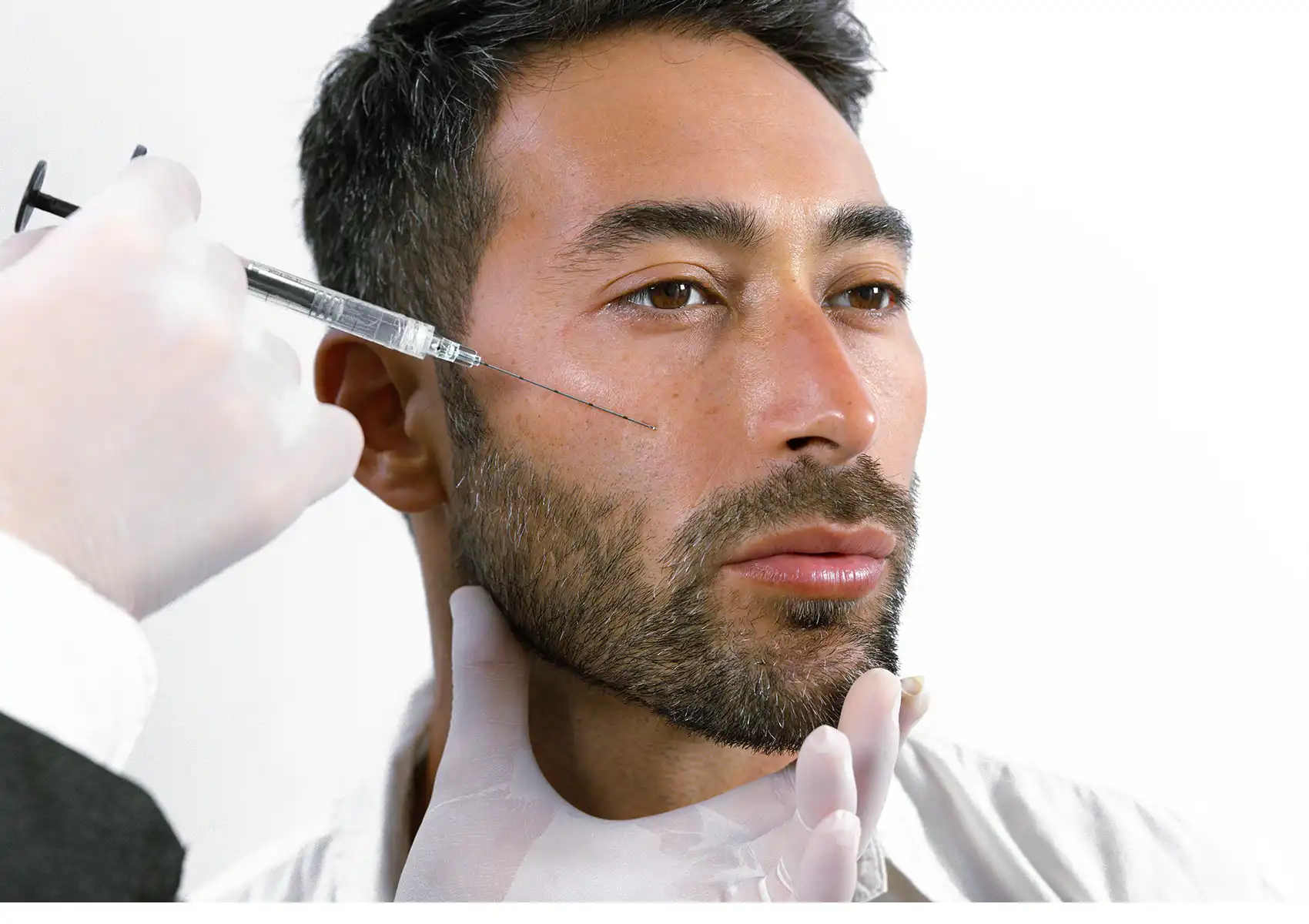
Alt text: A doctor injecting dermal filler into a male patient’s cheek at Anaya Aesthetics clinic in Kerobokan, Bali.
The results of dermal filler depend on more than the product itself. The injector’s technique, placement, amount, product characteristics, and your individual anatomy can all influence the outcome. The same filler may look different from one person to another depending on how and where it is used.
At our doctor-led beauty clinic in Bali, we assess your facial anatomy and treatment goals before recommending the appropriate product, amount, and placement for you.
Finding the Right Dermal Filler for You
The right filler depends on your concern, the area you want to treat, and your individual facial structure. Your first visit is about understanding these factors and finding the right approach for you. At Anaya Aesthetics in Kerobokan, near Seminyak, dermal filler treatments begin with a doctor-led assessment of your anatomy, facial movement, and treatment goals.
See if your treatment is included in our special offers. If you visit regularly, the Anaya VIP membership supports ongoing care. To discuss your concerns and arrange an assessment, contact us on WhatsApp.
Frequently Asked Questions
1. Does getting filler hurt?
Most people tolerate filler treatment well. The area is numbed beforehand, and you may feel some pressure or mild discomfort during the injections.
2. How much does dermal filler cost in Bali?
Prices start from around IDR 3,700,000 per ml, before 11% tax. You will receive an itemized quote at your consultation. We waive the IDR 333,000 fee if you proceed with treatment.
3. How long does filler last?
Hyaluronic acid filler lasts about nine to twelve months. It may be less in areas that move more, like the lips.
4. Can I get filler while visiting Bali?
Yes, and many people do. Book your appointment a week or two before any flight or big event so swelling can settle. Avoid strong sun for a day or two after treatment.

