
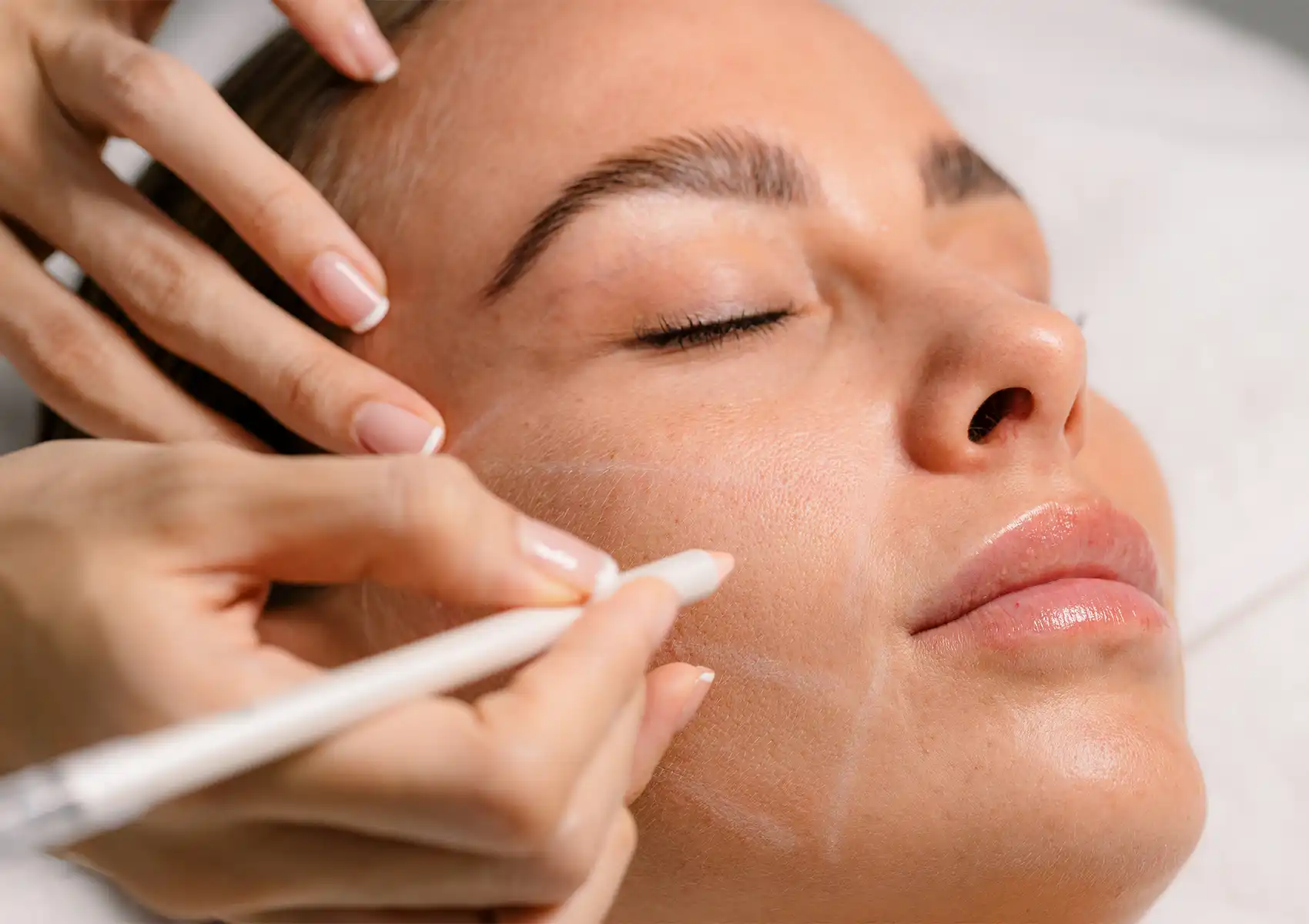
Clients rarely arrive asking for a specific device. They arrive pointing at their jawline. The question underneath is almost always the same: does this need tightening, or does it need lifting?
The skin has become less firm, but the underlying tissue has not significantly moved downward. A skin-tightening treatment may be appropriate, particularly when concerns such as fullness beneath the chin are also affecting the appearance of the jawline.
Not sure which concern is yours? A doctor-led assessment at Anaya Aesthetics, a beauty clinic Bali located in Kerobokan, settles it before any device is chosen. Book a consultation on WhatsApp.
Two Different Mechanisms
Start with what each treatment physically does. The rest of the decision follows from there.
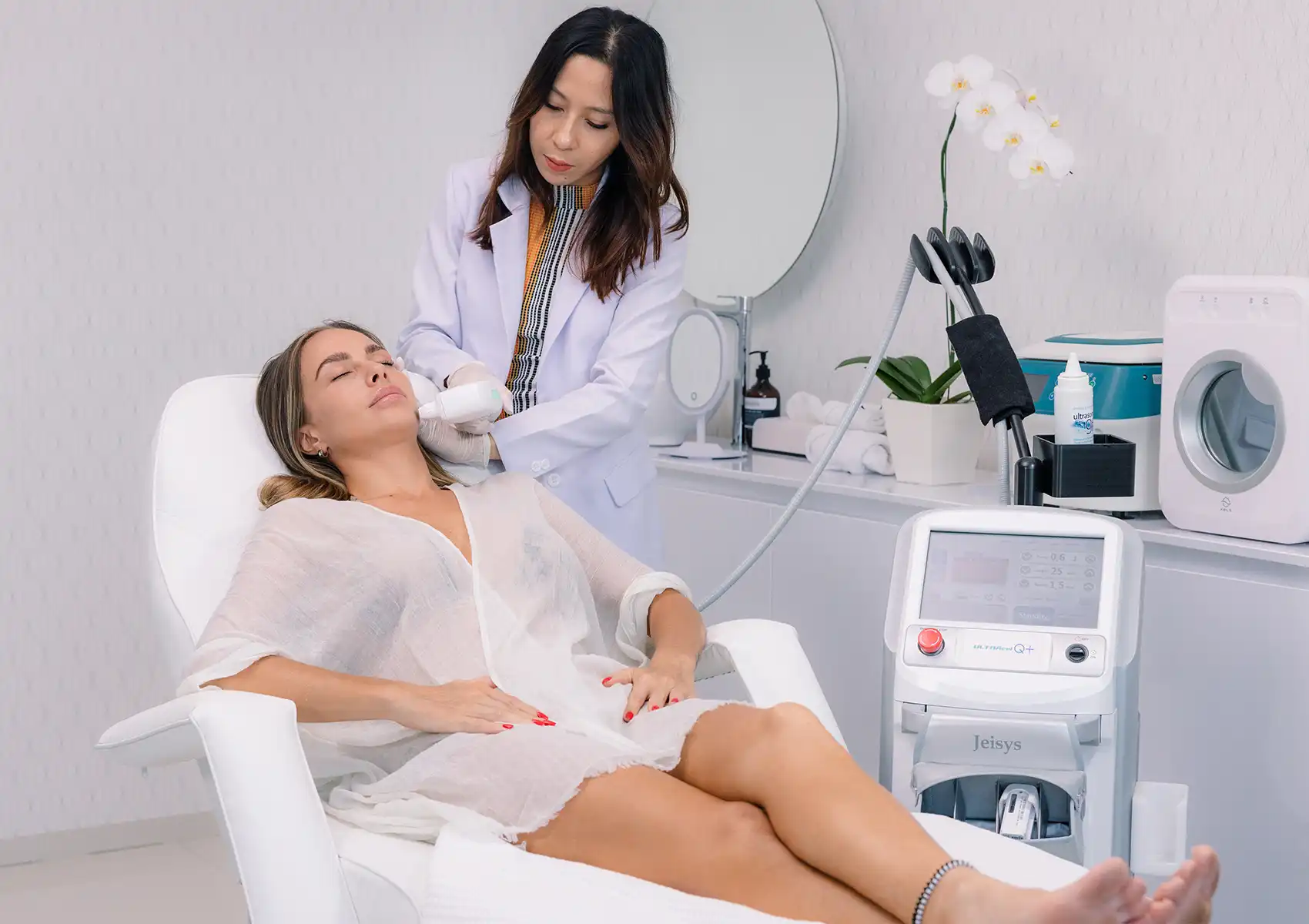
HIFU delivers focused ultrasound energy at controlled depths beneath the skin, creating small points of thermal injury that stimulate collagen remodelling and tightening.
A threadlift places absorbable sutures beneath the skin to mechanically reposition and support soft tissue.
The results develop differently. HIFU relies on your body’s response to controlled thermal stimulation over time. A threadlift produces an immediate mechanical change in tissue position, followed by a slower biological response around the threads.
What HIFU Does to Collagen
Microfocused ultrasound creates small thermal coagulation points at defined depths. These cause collagen to contract, producing an initial tightening effect, and stimulate longer-term collagen renewal.
That process takes time. A systematic review of microfocused ultrasound found tightening was typically visible around 90 days and could continue for up to a year, though results varied between patients. HIFU is not an instant facelift. It is a gradual approach to firmness and laxity.
What a Threadlift Does Instead
A threadlift is primarily mechanical. Sutures are placed along planned vectors to reposition tissue, so some lift can be seen immediately, and the surrounding response can stimulate collagen as the threads absorb. The distinction is simple: a threadlift changes tissue position, while HIFU addresses skin firmness.
HIFU vs Threadlift at a Glance
| HIFU | Threadlift | |
| Best for | Mild to moderate laxity, skin firmness | Visible tissue descent, repositioning |
| How it works | Focused ultrasound, collagen remodelling | Absorbable sutures reposition tissue |
| Visible result | Gradual, over about 90 days to a year | Some lift immediately, refines over weeks |
| Downtime | Usually minimal; brief redness or tenderness | Allow time for swelling or bruising to settle |
| Invasiveness | Non-invasive, no incisions | Minimally invasive |
| Starting price at Anaya Aesthetics | From IDR 4,500,000 (Lower Face) for a single session | From IDR 5,000,000 (PDO threads) for 2 pairs |
Prices exclude 11% tax and are a starting guide. Final pricing depends on the areas treated, and the plan agreed at consultation. See the current price list.
Tightening and Lifting Are Not the Same Thing
This is where the decision becomes more useful than simply comparing devices.
- Skin laxity without significant descent. The skin has become less firm, but the underlying tissue has not significantly moved downward. A skin-tightening treatment may be appropriate.
- Tissue descent. The midface, lower face, or jawline has visibly shifted downward. A treatment designed to reposition tissue may be more appropriate.
- Both. Some people have a combination of laxity and descent, in which case the doctor may consider more than one approach.
A simple mirror test can help explain the difference. Gently lift the skin at your temple with two fingers. If the movement itself resembles the result you are looking for, your concern may involve tissue position. If you mainly want the skin to feel firmer while remaining in roughly the same position, tightening may be closer to the issue.
It is not a diagnostic test, however. Facial anatomy is more complicated than what can be assessed in a mirror, which is why treatment selection should follow a clinical assessment.
When HIFU Makes More Sense
- Laxity is mild to moderate.
- Firmness matters more than significant descent.
- You prefer a non-invasive option with no incisions.
- You want gradual improvement rather than an immediate lift.
When Threads Make More Sense
- There is noticeable tissue descent rather than laxity alone.
- You want a more immediate visible change in position.
- Volume is adequate, but tissue position is the main concern.
- A previous tightening treatment improved firmness but not descent.
Threadlift results can show immediately, though the degree and longevity vary between patients and thread types.
Still weighing the two? Send us a photo and your main concern, and a doctor will tell you honestly which approach fits, or whether you need neither yet. Message the medical team on WhatsApp. Planning several treatments this year? Ask about Anaya Aesthetics’ VIP Membership.
Sessions, Cost and Aftercare
The number of sessions and the maintenance interval depend on your skin and the plan your doctor sets, and are confirmed at consultation. The price of HIFU starts from IDR 4,500,000 for the Lower Face and threadlift from IDR 5,000,000 for PDO threads; both exclude 11% tax, and the final figure depends on the areas treated. A consultation is IDR 300,000 plus tax (IDR 333,000), waived if you proceed with treatment.
Considerations for Bali
Bali adds one practical factor: sun exposure. Ultraviolet light drives photoageing and breaks down collagen, so consistent sun protection matters when you are managing laxity and trying to preserve results.
Can You Combine HIFU and Threadlift?
These treatments are not always alternatives. Some people benefit from addressing both tissue position and skin quality, but the decision, sequence and interval should be individualised by your doctor rather than following a fixed protocol.
Make an Appointment

Neither treatment is automatically the right answer. The better question is whether your main concern is skin laxity, tissue position, or a mix, and that needs an assessment of your facial structure rather than a comparison chart.
At Anaya Aesthetics, a beauty clinic in Bali located in Kerobokan about five minutes from Seminyak, the medical team assesses your laxity, tissue descent and volume before recommending an approach.
Book a consultation on WhatsApp. It is also worth checking the latest treatment offers and, if you are planning treatments over the year, the VIP membership.
A generic protocol treats every jawline the same. A doctor-led assessment does not.
Frequently Asked Questions
Which lasts longer, HIFU or a threadlift?
Both vary by person. HIFU builds gradually with your collagen response; threadlift longevity depends on thread type and tissue response. Your doctor will give a realistic estimate.
Is either treatment painful?
Both are well tolerated. HIFU can feel warm with brief prickling; a threadlift is done under local anaesthetic. Any tenderness usually settles quickly.
How soon can I fly or return to activities?
HIFU generally has minimal downtime; after a threadlift, allow a little more time for swelling or bruising to settle before events or long travel.
Can I have this in my 30s?
Age alone does not decide suitability. Facial structure, laxity, tissue position, and your goal matter far more.
How do I know which one I need?
Only a clinical assessment reliably separates laxity from descent. That is what the consultation is for.

