
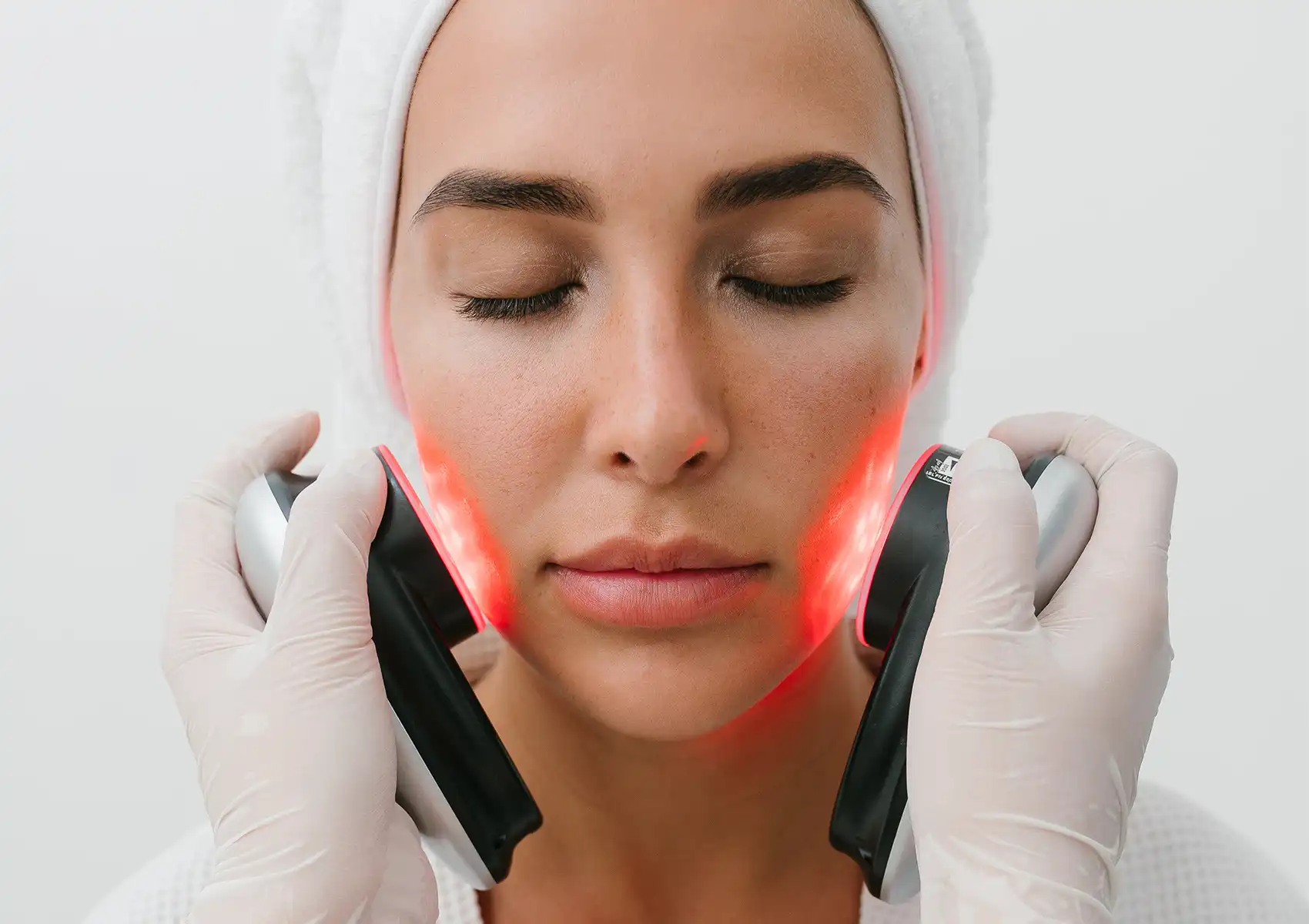
Facials can involve cleansing, exfoliation, extraction, and hydration, but the way those steps are performed can be very different.
Hydrafacial vs. a regular facial is less about which treatment is more luxurious and more about the mechanism. One is a therapist-led manual treatment; the other uses a device to combine exfoliation, extraction, and topical hydration in a single pass. Understanding that difference helps you choose what suits your skin now.
Not sure which facial your skin needs today? Oily, congested, sensitive, or event-ready skin each points to a different choice. Tell our team your skin type and timing, and we will match the treatment. Ask us on WhatsApp and book in a couple of taps.
What a Standard Facial Does
A traditional facial is generally delivered by hand, with the therapist adapting the treatment to the skin throughout the appointment.
Depending on the facial, it may include:
- Cleansing to remove surface impurities and product.
- Exfoliation, either mechanical or with a chemical exfoliant.
- Manual extraction of selected areas of congestion.
- A mask followed by serums, moisturiser, or other topical products.
- Massage, depending on the treatment protocol.
The strengths are real. A skilled therapist can adjust the treatment continuously according to how your skin responds, and targeted manual extraction can be useful for localised congestion. Massage also provides a hands-on component that a device treatment does not replicate.
The limitations depend on the protocol. Manual extraction involves pressure on the skin and can leave temporary redness or tenderness. Topical products are also applied to the skin’s surface, with their absorption influenced by the condition of the skin barrier and the formulation being used.
What a Hydrafacial Does Differently

The mechanism is the distinction.
A Hydrafacial is a form of hydradermabrasion rather than a manual facial protocol. It uses a specialised handpiece with vortex technology to combine exfoliation, extraction and the application of treatment solutions.
During the treatment, the device loosens and removes surface debris and impurities while delivering a solution to the skin. The process combines cleansing, exfoliation, extraction, and hydration rather than performing each step entirely separately.
That produces two practical differences:
- Extraction uses vortex suction rather than manual pressure. This generally makes the treatment gentler than conventional manual extraction, although temporary redness can still occur.
- Treatment solutions are applied during the device pass. The skin is exfoliated and replenished as part of the same treatment rather than relying solely on a separate mask or topical application afterwards.
Research into hydradermabrasion and related resurfacing approaches suggests that combining exfoliation with moisturising solutions can improve tolerability and recovery compared with more aggressive resurfacing methods.
At Anaya Aesthetics, a beauty clinic Bali, options include the Signature Hydrafacial and Platinum Hydrafacial.
Why This Matters for Oily and Congested Skin
Bali’s warm, humid environment can make some people feel oilier and sweat more, particularly when spending time outdoors. For those with naturally oily or congested skin, that can make regular cleansing and appropriate exfoliation particularly important.
A Hydrafacial can be useful for superficial congestion because its suction and exfoliation are performed across the treated area rather than relying entirely on individual manual extractions.
There is also published evidence on Hydrafacial treatments for acne-prone skin. A clinical study examining a series of six Hydrafacial treatments reported improvements in several measures of skin appearance in participants with acne.
That said, a Hydrafacial should not be treated as a replacement for medical acne treatment when someone has active or persistent acne.
Struggling with oily or congested skin in the heat? A quick skin check tells you whether a Hydrafacial, a deep cleansing facial, or medical care fits best. Message our team on WhatsApp. Regular facials add up, so ask how the VIP membership works if you plan to come back.
Choosing a Facial Before an Event
This is where the difference becomes particularly practical.
A facial before an event needs to be planned around how your skin normally reacts to treatment.
Manual extraction can produce temporary redness or tenderness, particularly when a significant amount of congestion is addressed. For an important event, it is therefore sensible to leave enough time for the skin to settle rather than booking an unfamiliar treatment immediately beforehand.
A Hydrafacial is generally associated with minimal downtime, which can make it attractive when you want a fresher, more hydrated appearance close to an event. However, individual responses vary, so an important event is not the ideal time to experiment with a treatment you have never had before.
If you are preparing for a wedding, photoshoot, or other major occasion, the safer approach is to establish how your skin responds well in advance and schedule the final treatment accordingly.
When a Standard Facial Is Still the Better Choice
The device is not automatically superior.
- When you want massage and hands-on treatment. Lymphatic or facial massage provides benefits and sensations that a device pass does not replicate.
- When congestion is localised and stubborn. Selected comedones may benefit from targeted manual extraction.
- When the skin barrier is compromised. Sensitive or over-treated skin may need a gentler protocol, depending on its condition.
- When you want a specific treatment methodology. Some facial protocols are built around particular formulations, techniques, and product lines.
Anaya Aesthetics’ facial range includes different approaches, allowing the treatment to be selected according to the condition and goals of the skin.
Cost and What to Expect
At Anaya Aesthetics, the Signature Hydrafacial starts from IDR 2,500,000 and the Platinum Hydrafacial from IDR 3,000,000, all excluding 11% tax. Most facials are comfortable with little to no downtime, though brief redness can follow extraction. Add-ons such as LED therapy or a peel can be included depending on the treatment, and your therapist will suggest what suits your skin on the day.
Make an Appointment

A deep cleansing facial and a Hydrafacial are not necessarily competing for the same job. One is a manual treatment a therapist adapts throughout; the other is a device-based treatment combining exfoliation, vortex extraction, and treatment solutions. Which suits you depends on your skin type, current condition, tolerance for extraction, and how soon you need your skin to look its best.
At Anaya Aesthetics, a beauty clinic in Bali located in Kerobokan, about five minutes from Seminyak, our team can assess your skin and recommend the right facial. To decide which suits your skin now, make an appointment on WhatsApp. If you are planning a course rather than a single treatment, the current promotions are worth a look.
The best facial is not necessarily the most advanced one. It is the one matched to what your skin needs now.
Frequently Asked Questions
Is a Hydrafacial better than a normal facial?
Neither is universally better. A Hydrafacial is device-led and gentle on extraction; a standard facial is hand-led and highly adaptable. The right one depends on your skin and timing.
How often can I have one?
Both can be repeated as a routine. Frequency depends on your skin and goals, and the team will advise a sensible interval.
Which is best before a wedding or shoot?
A Hydrafacial’s minimal downtime suits pre-event glow, but only if you have had it before. Try any facial well ahead of the date.
Will a Hydrafacial clear my acne?
It can help superficial congestion and acne-prone skin, but it is not a substitute for medical acne treatment when acne is active.
Is either good for oily skin?
Yes. Both address oil and congestion; a Hydrafacial covers the whole area with suction, while a manual facial targets specific spots.

